How to Choose Snowboard and Splitboard Bindings in 2023
The Complete Guide
Whether you own a snowboard or a splitboard, choosing the right bindings is essential to ensuring maximum comfort on the slopes. Bindings connect your feet to your board, and they’re what allow you to transfer your movements and control your line. That’s why it’s important to be properly equipped. The goal is to choose bindings that are suited to your board and your riding style.
How do you choose snowboard bindings?
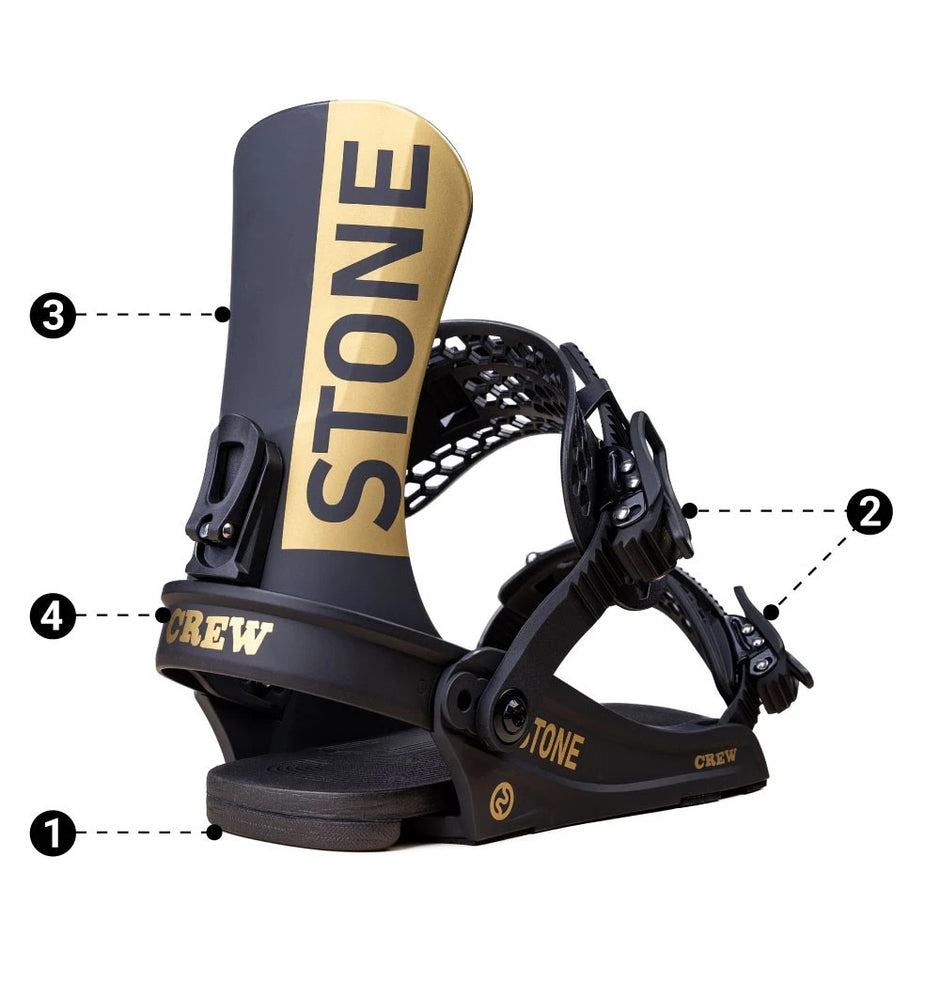
Before going any further, it is important to understand that a binding consists of four main parts:
1 - A baseplate: The baseplate is the main component of the binding. It’s the part of the binding that connects your foot to the board. It absorbs shocks and transfers your energy to the board. A good baseplate should not affect the flexibility of your board.
2 - Straps: Straps are the two fasteners that go over your foot. They secure your foot at the ankle and toes. This part is adjustable to fit the size of your boots.
3 - A spoiler: The spoiler is the vertical section at the back of the boot where the lower part of your calf rests when you’re in a backside stance. The highback supports your stance during turns and transfers your movements to the board.
4 - A heel cup: The heel cup is the arch at the heel, located between the baseplate and the spoiler. The stiffer this part is, the more responsive your binding will be.
It is the materials and finishes used in these four components that determine whether your bindings are considered high-end or not. At Stone, all our bindings are made with high-end materials. We don’t offer flimsy bindings just to attract customers with a low price. As a result, your choice will be based more on aesthetics. As for riding styles: our bindings are perfectly suited for freestyle and freeride. Their balance of weight, durability, and performance makes them reliable companions for comfortable sessions, giving you peace of mind.

How do you choose splitboard bindings?
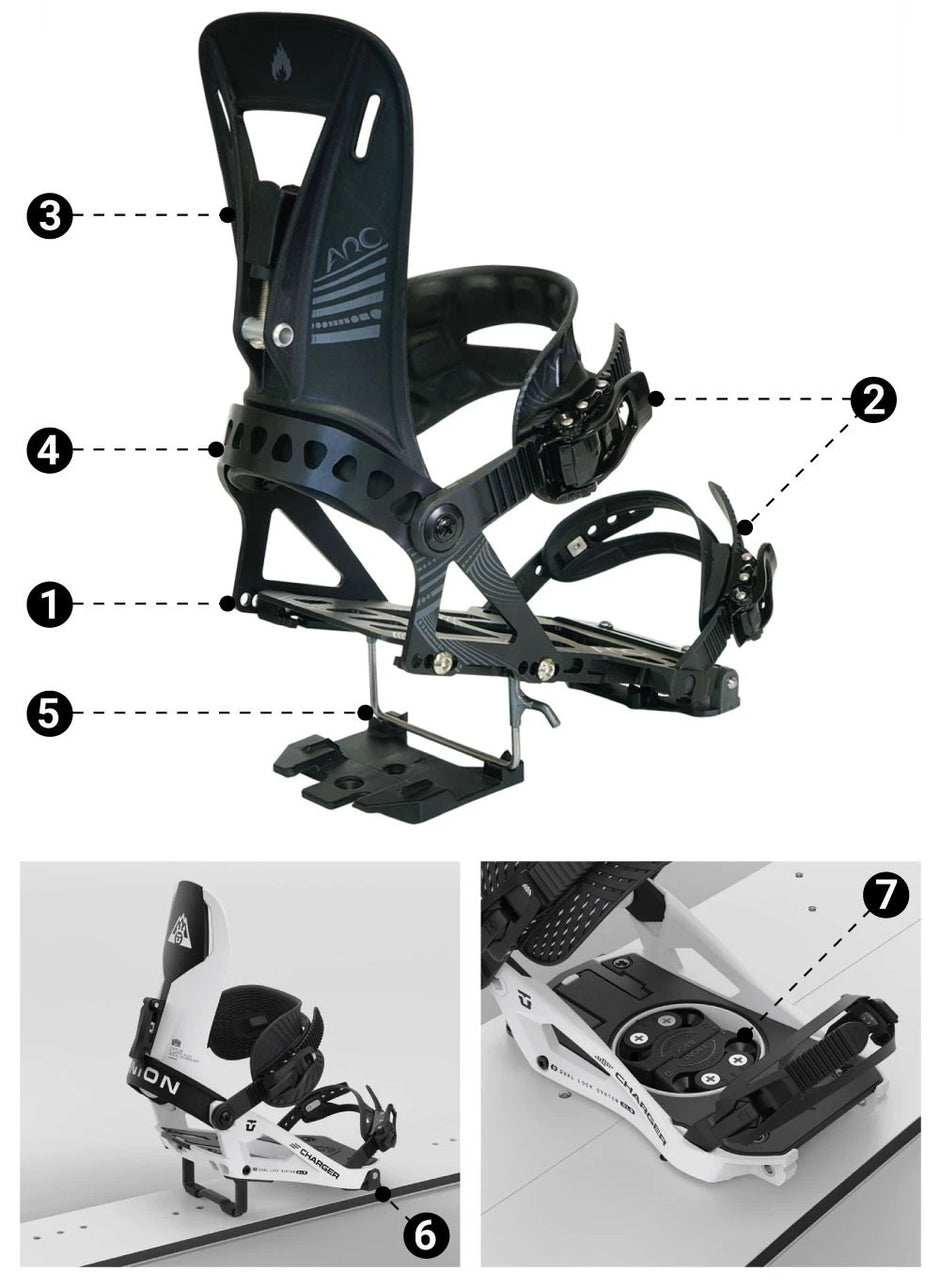
When it comes to splitboard bindings, the four main components are the same (1 through 4). They obviously allow you to snowboard under conditions very similar to those of dedicated snowboard bindings. The difference is that they also allow you to go ski touring by incorporating a mode that lets you switch to ski mode simply by adjusting their position, without having to change your boots or bindings. This way, you can tackle ascents on skis and descents on a snowboard without having to carry heavy, bulky gear. Here’s how our splitboard bindings are constructed:
1 - The baseplate: Let’s break it down step by step, comparing the Spark and Union baseplates. The Spark baseplate is made of ALUMINUM, into which the pucks mounted on the splitboard slide. With Union, the bindings are mounted onto the puck system on the board by turning them a quarter turn. The Union baseplate is made of injection-molded plastic. There is a difference in comfort between Spark and Union. With Spark, your boots will rest on aluminum, whereas with Union, you’ll feel like you have real snowboard bindings under your feet.
2 - Straps: Straps are the two fasteners that go over your foot. They secure your foot at the ankle and toes. This part is adjustable to fit the size of your boots. At both Union and Spark, the straps across the instep or over the toes are of very high quality. Both ensure you stay securely in your bindings during ascents and descents.
3 - The spoiler: this is the plastic part where you rest your calf. It helps you maintain your line when carving backside turns.
4 - A heel cup: The heel cup is the semicircular aluminum piece located beneath the spoiler that allows the spoiler to rest against it and support your weight during turns.
5 - The Climbing Bar: This is a simple system built into all splitboard bindings. For maximum efficiency and to prevent loss, the system unfolds but does not come apart. Its sole purpose is to adjust the position of your bindings, allowing you to adopt more comfortable positions on the steepest climbs.
6 - The touring binding system: as the name suggests, this is the system that allows you to set your bindings to the touring position. For each binding, you’ll need to remove the bindings from the board while they’re in the snowboard position in order to reposition them in the touring position. In touring mode, just like with any pair of skis, the bindings will face the same direction as the skis. Other inserts (which are not found on snowboard decks) include additional components that allow you to set your splitboard to touring mode quickly, easily, and efficiently.
7 - The snowboard binding system: The snowboard setup will use inserts on both skis to ensure the stiffness and stability required for snowboarding.
Of course, each binding has been designed to allow you to easily switch from ski mode to snowboard mode without tools and without taking off your gloves. They all do the same thing, but in different ways: the Union Explorer features a pin system, the Union Charger a rotating locking slider system, and the Spark Arc a non-rotating locking slider system. Each system is proven; they are all very sturdy and durable. Aside from price, your choice should then come down to the system that best suits your needs. To give you a clear idea of these systems, product videos are available on each product page. To further help you choose, another key difference is that Union binding frames are made from the highest-quality injection-molded plastic on the market, whereas Spark bindings are made of aluminum, making them lightweight and minimalist—a feature highly regarded in the splitboarding community.
Please note: The parts that attach to the inserts and allow for the snowboard stance—known as “PUCKS”—are included with all Union bindings, while the Spark model can be ordered with or without them. If you choose the Spark Arc, be sure to specify whether or not you want these parts, depending on whether you already have them or not.

Choosing your bindings is easy!
Whether they’re made by Stone Snowboards Canada, Union, or Spark, for the sake of simplicity, we’ve opted for top-of-the-line models. Thanks to our business model, our prices are already lower than the competition’s, which means we don’t need to rely on low-end loss leaders and saves us all a lot of hassle. We also don’t throw around technical jargon—like talking about material flex or other overly technical details that ultimately have a negligible impact on your ride. Instead, we guarantee that all our products are comfortable and fully customizable, sturdy, durable, and efficient, ensuring you an optimal riding experience. Therefore, to make your choice as simple as possible, here’s what we recommend you do:
SNOWBOARD BINDINGS: As we mentioned earlier, our snowboard bindings are all built to the same high standards and are all designed to be top-of-the-line. Your choice should therefore be based on style.
SPLITBOARD BINDINGS: Choosing the right pair is a bit more complicated due to their different binding systems. One is a rotating pin system, another is a rotating slide system, and the last is a non-rotating slide system. Each product page includes a video that will help you understand and choose which system is best for you. If you’re a beginner on a tight budget, the pin system—though slightly less efficient than the others—is still an excellent choice. Keep in mind that these three different systems all do the same thing. If you have a larger budget and want optimal comfort, the other systems will appeal to you.
Of course, it’s important to keep in mind that snowboarding and splitboarding are, above all, about how it feels. The best bindings for you are the ones that let you enjoy your ride.


partners


