How to Choose a Snowboard
The Complete Guide
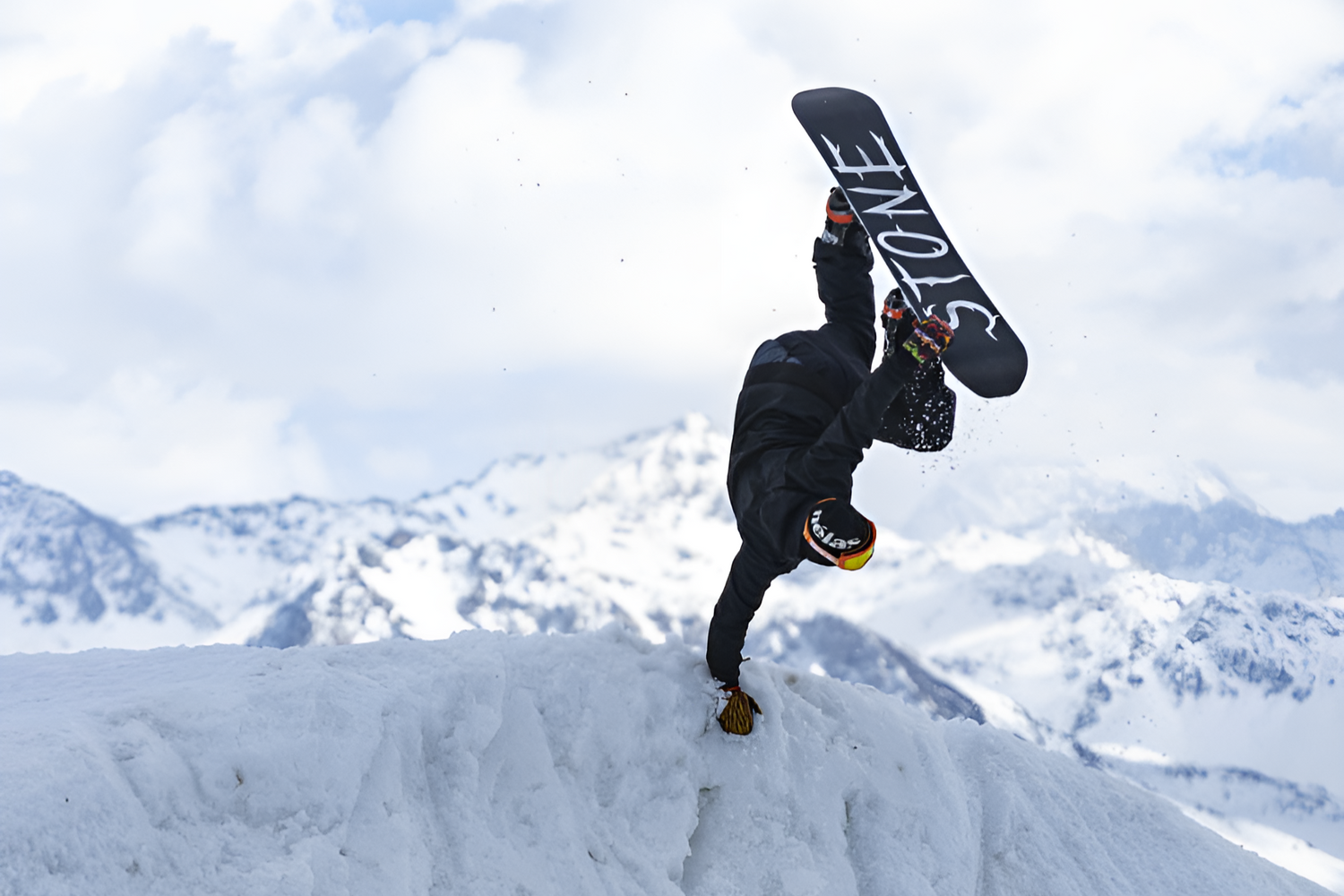
Whether you're a beginner, intermediate, or experienced rider, choosing the right snowboard is essential for improving your performance and getting the most out of your time on the slopes. There are several benefits to be gained: optimizing your performance by improving maneuverability and stability, ensuring safety by feeling more confident on your board, increasing comfort by avoiding pain or discomfort, and enhancing your riding experience by choosing a snowboard that meets your specific expectations and needs. The Stone Snowboards Canada team offers expert advice in this comprehensive guide: how to choose a snowboard?
How to Choose a Snowboard: A Video Guide
Learn the basics of snowboarding
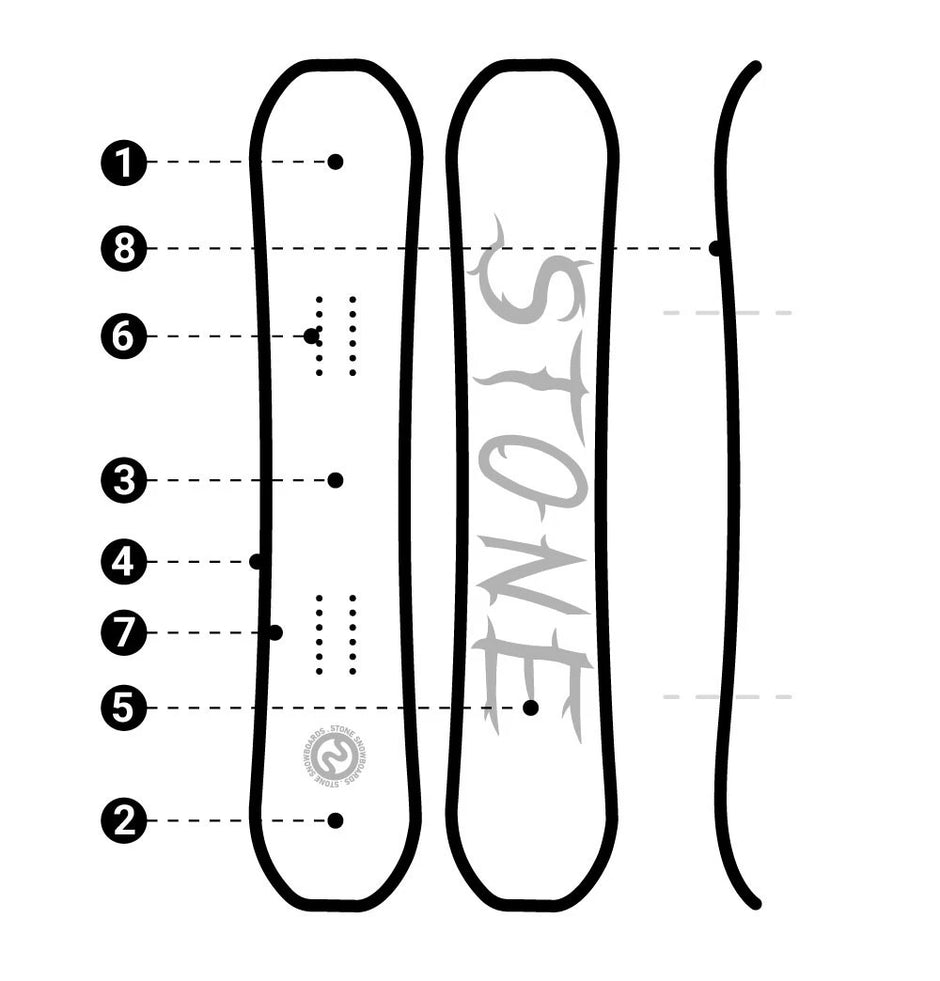
Let’s start at the beginning: let’s review the basics of snowboarding. Before considering the factors involved in choosing a snowboard, it’s essential that you understand what a snowboard is made of. Each part has a specific role and will influence your riding performance in its own way.
1 - The nose: this is the front part of the board, and it affects buoyancy.
2 - The tail: this is the rear part of the board, and it affects the board’s stability and maneuverability.
3 - The core: this is the central part of the board; it affects the board’s flexibility, lightness, and responsiveness.
4 - The edges: these are the metal edges on each side of the board; they affect grip and turn control.
5 - The base: this is the bottom part of the board that comes into contact with the snow, which directly affects glide.
6 - The inserts: these are the holes in the board where the bindings are placed; they should be chosen based on personal preferences, foot size, and riding style.
7 - The sides: these are the edges of the board, which, in addition to providing extra protection, influence shock absorption and energy transfer.
8 - Finally, the camber: this refers to the board’s longitudinal curvature (classic, reverse, flat, or hybrid), which influences stability, rebound, and the quality of turn initiation.
By understanding the different parts of the board and their respective roles in your riding experience, you already have the key information you need to know how to choose a snowboard.

How do you choose a snowboard based on your riding style?
Another factor to consider when choosing a snowboard: there are different types of snowboards depending on your riding style, namely freestyle, freeride, and all-mountain.
First category: freestyle snowboards.
They’re perfect for riders who love doing tricks. This type of snowboard is generally shorter, lighter, and more flexible, making it easier to perform maneuvers and spins. Freestyle snowboards are also often described as having a twintip shape, meaning they’re perfectly symmetrical from front to back, allowing you to ride switch.
Second style: freeride snowboards.
This is the type of snowboard you should choose if you plan to ride off-piste in the backcountry. Unlike freestyle boards, freeride snowboards have a directional shape, meaning the front is longer than the back. Freeride snowboards are the best choice for making smoother turns, getting better grip on hard snow, and floating better in powder. They provide greater stability at high speeds and better traction.
Third style: all-mountain snowboards.
This is a combination of the two types of boards. All-mountain snowboards are suitable for all types of terrain: on-piste, off-piste, and snowparks. They combine maneuverability, stability, and versatility.
What are the technical specifications of a snowboard?
Let’s now turn our attention to the question of how to choose a snowboard based on its technical specifications, namely its length, width, and flex.
When it comes to length, keep in mind that it’s important to choose a board based on your height and weight. By making the right choice, you’ll gain better maneuverability and stability. To learn how to choose a snowboard based on your height, feel free to consult a size chart. Generally, it’s recommended to choose a board that’s 15 to 20 centimeters shorter than your own height. It should therefore reach between your shoulders and your chin.
When choosing the width of your snowboard, you can simply base your decision on the size of your feet. This is an important factor to consider, especially if you want better control when turning. Of course, this is a factor that should be adapted to your personal situation, particularly your riding style: if you mainly do freestyle, you might want to opt for a slightly narrower board to gain better maneuverability, whereas a rider who spends time in powder or freeriding might choose a wider board that offers better stability.
Finally, when we talk about a snowboard’s flex, we’re referring to its stiffness. For beginners, it’s best to choose flexible snowboards, which are generally more forgiving. A stiffer snowboard, on the other hand, offers better stability at high speeds and a more precise response, making it the better choice for more experienced riders.


Consider your skill level to choose the right snowboard
Choosing the right program is essential, because to maximize your enjoyment and improve your riding efficiency, you need the best possible equipment. This choice is directly tied to your skill level: the more you practice, the clearer your vision of what you want to do becomes, and the better equipped you’ll be to choose the right snowboard.
Advanced and expert riders will already have experience on trails, in snowparks, and off-piste, and will have developed a particular affinity for one discipline or another. Beginners, on the other hand, are often more undecided, interested in snowboarding as a whole, and dream of being able to do it all! In this specific case, we’ll generally guide you toward beginner-friendly gear that will help you progress quickly and refine your riding preferences. To help you make your choice, here are three general examples to help you see things more clearly:
1 - I'M A BEGINNER
I love snowboarding. Whether it’s freestyle, all-mountain, or freeride, I love all these disciplines and have a really hard time deciding! As with any sport, certain activities require experience and a clear head. I realize that jumping right into a park or off the top of a snowy mountain without thinking can be dangerous. First, I need to improve, practice, and better understand the sport to refine my riding style. In that case, I’ll lean toward a freestyle board with a twin-tip shape and a flex that forgives—almost—everything. I could then experiment on the slopes and their edges, gradually tackle powder sections by leaning heavily on my back leg, and why not try a few jumps and rails in suitable parks.
2 - I AM AT AN INTERMEDIATE LEVEL
I’ve already tried out the slopes, a bit of the park, and a few freeride runs. I haven’t really developed any particular preferences; I enjoy snowboarding in general and don’t necessarily plan on getting a board that’s too specialized. In that case, I’ll go for an all-mountain board with a slight setback (bindings set back on the board to relieve pressure on the back leg during freeriding). With a flex that’s generally a bit stiffer, it’ll let me ride anywhere without straining. More stable, faster, less tiring, and more precise in freeride, it easily serves as a go-to board when you have multiple boards specific to each discipline (quiver).
3 - I AM AT AN ADVANCED LEVEL
I’ve thought this through. I’ve been riding a freestyle or all-mountain board for a few years now, and I’m doing pretty well! But here’s the thing—it’s not that it’s boring, but I’d still like to feel that sense of renewal, to be surprised by a shape or the precision of a turn; I want to feel that thrill again, just like on my very first run! I’m going to look into more unconventional, more specialized boards. The time has come to explore directional shapes, progressive rocker, and boards so precise that I’ll be able to reinvent my riding, both on and off-piste. I realize it’ll be harder to handle in freestyle, but once again, nothing is impossible! I don’t want to give up my park skills just yet, so I’ll keep this great board that’s helped me grow and evolve and build myself a quiver. That way, I’ll be perfectly equipped to handle all my desires and situations!
Consider your budget when buying a snowboard
As we all know, a snowboard is a significant investment. You’ll need to spend several hundred euros to buy one, and a little more for all the related gear. That’s why we recommend making a long-term choice: don’t be afraid to invest in a reliable product.
At Stone Snowboards Canada, we also offer you the chance to browse our Clearance page to find great deals on used or discontinued snowboards and splitboards.
In conclusion, knowing how to choose the right snowboard is essential if you want to get the most out of your snowboarding experience. There are several factors to consider: your riding style, skill level, body type, and budget. Don’t hesitate to consult professionals like Stone Snowboards, who can guide you and provide personalized advice. And to make sure you don’t make a mistake, buy a snowboard package that includes the board of your choice and matching bindings. See you soon, Stoners!


partners


